
Using rosemary oil for hair growth is easy for a week and surprisingly hard for six months. I remember checking my part after ten days and feeling a little silly when nothing looked different.
The short answer: dilute 2 to 3 drops of rosemary essential oil in 1 tablespoon (15 ml) of carrier oil, massage it into your scalp two or three times a week, leave it on for at least two hours or overnight, then wash it out. Keep that rhythm for six months before judging.
How Much Should Rosemary Oil Be Diluted for Hair Growth?
Rosemary oil for hair growth is gentlest at about 2 to 3 drops of essential oil per tablespoon (15 ml) of carrier oil. A stronger mix can sting the scalp and won’t speed anything up.
What you need:
- Rosemary essential oil
- 1 tablespoon of jojoba, sweet almond or light olive oil (jojoba feels lightest on an oily scalp)
Patch test first: dab a little on your inner elbow and wait 24 hours, skipping it if you see redness or itching. Keep it away from your eyes and off a broken or sore scalp.
How Often Should Rosemary Oil Go on Your Scalp?
Two or three applications of diluted rosemary oil a week is a rhythm most people can keep for months, and keeping it is the whole point. Daily use can leave fine hair limp.
Leave it on for at least two hours or overnight; I lay an old towel over my pillow because the herby, slightly camphor-like scent finds its way into cotton. A mild tingle is fine. If your scalp burns or itches, wash the blend out and use one drop less next time.
What Does a Rosemary Oil Routine Look Like Around Wash Day?
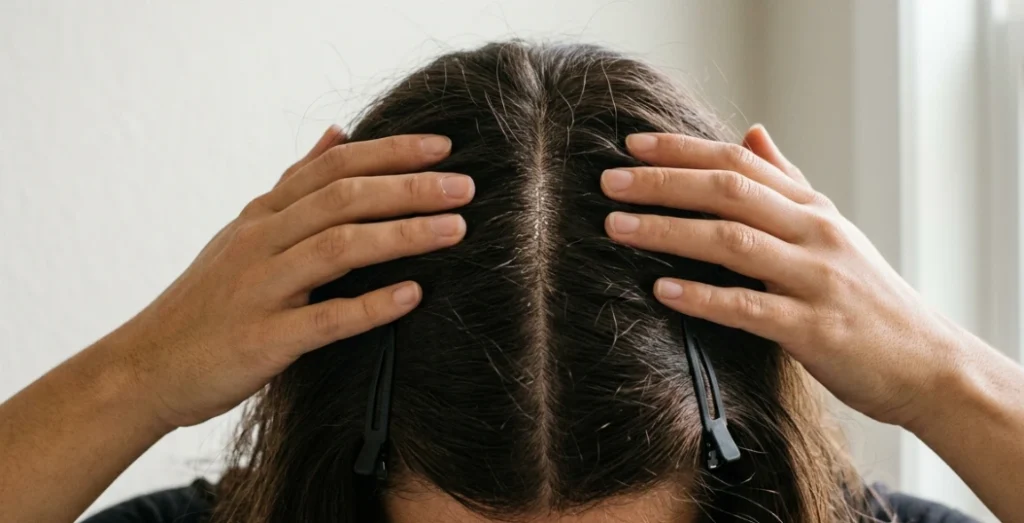
The easiest rosemary oil routine attaches each application to a wash you already planned, so it never feels like an extra chore.
- Part dry hair into four sections with clips.
- Dot about half a teaspoon of the blend along each part, focusing on thinner areas.
- Massage in small circles for three to four minutes, using the pads of your fingers, never your nails.
- Leave it on for two hours or overnight.
- Work shampoo into the oily roots before adding water; a second shampoo usually clears any film.
If you color your hair, skip rosemary oil the day before a dye session, since henna and plant dyes take best on clean hair. Keeping the blend off your lengths also helps with keeping natural red dye from fading. If you’re still settling on how often to dye your hair black, plan rosemary nights around those dye days.
What Can Rosemary Oil Show at One, Three and Six Months?
Rosemary oil for hair growth works slowly, so the first months are mostly about building the habit. At one month, a calmer, less flaky scalp and little else is normal.
In a six-month trial of 100 men, hair counts showed no clear change at three months but rose significantly by six months. That study only included men with pattern thinning, so results for others may differ, but the timeline is a useful guide.
If month three looks like day one, keep going.
How to Track Rosemary Oil Hair Growth Progress at Home
Monthly photos are the most reliable way to see whether rosemary oil is helping your hair growth, because daily mirror checks miss slow change.
- Take photos on the first day of each month, in the same spot by a window, in daylight.
- Photograph your center part and hairline from the same height, with dry, unstyled hair.
- Look for short, fine hairs along the part and temples.
I only compare month one with month six; side by side, small changes are easier to judge than in a mirror on a tired evening.
Is Extra Shedding Normal While Using Rosemary Oil?
Hair in the drain while using rosemary oil is usually ordinary shedding, not a sign the oil is causing loss.
Dermatologists consider shedding somewhere between 50 and 100 hairs a day normal, so a few strands after a scalp massage are expected.
If you see patchy bald spots, clumps coming out, a sore or scaly scalp, or sudden heavy shedding, pause the oil and see a dermatologist. Those signs point to something rosemary oil can’t sort out on its own.
Final Takeaway
Rosemary oil taught me more about patience than about hair. The massage takes ten minutes; the hard part is trusting a slow process when the mirror shows nothing new for weeks. If you dilute it gently, keep a steady rhythm around wash day and let your monthly photos do the judging, you give rosemary oil a fair chance to show what it can do for your hair growth.
Try This Today
Take your first progress photo of your part in daylight before you mix anything. Six months from now, you’ll be glad that starting point exists.
Frequently Asked Questions
Can rosemary oil be left in hair overnight for hair growth?
Yes, diluted rosemary oil can stay on overnight once your patch test is clear. Cover your pillow with an old towel, and wash it out in the morning with two rounds of shampoo so your scalp doesn’t feel heavy.
Can rosemary oil be used on henna-dyed or colored hair?
Diluted rosemary oil is usually fine on colored hair when it stays on the scalp. Avoid applying it the day before a henna or dye session, and these hair dye tips and tricks help fresh color stay even.
Does rosemary water work the same as rosemary oil for hair growth?
Rosemary water is much milder than a diluted rosemary oil blend, and it rinses away quickly. It makes a pleasant spray but offers far less scalp contact than an oil left on for hours.

- Castor Oil Benefits for Hair: More Shine and Softer, Smoother Ends - November 19, 2026
- Rosemary Oil Benefits for Hair: What It Does Beyond Growth - November 11, 2026
- How Do You Make a Rosemary Hair Oil Recipe at Home That Actually Works? - October 29, 2026