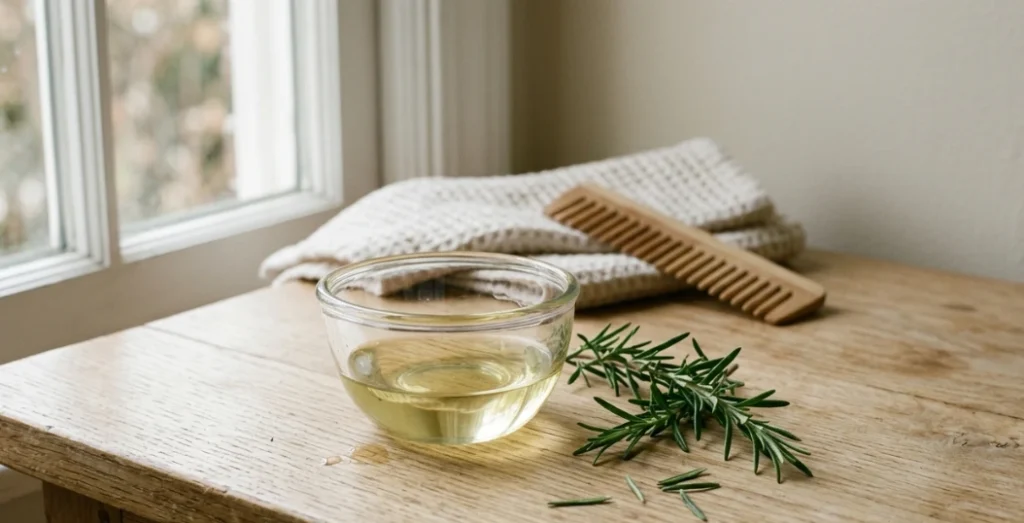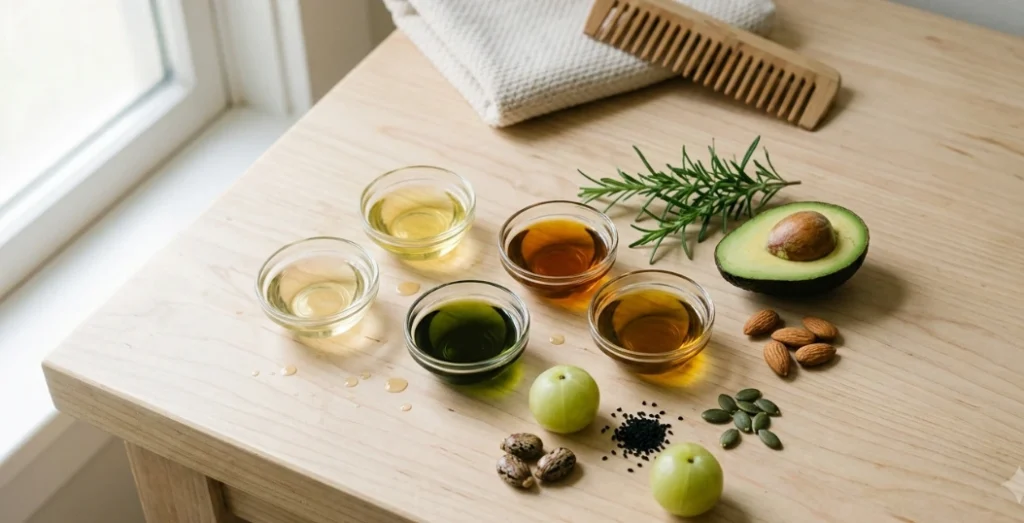
Hair oil uses fall into three jobs: caring for the scalp, softening the lengths, and giving dry hair a rich treatment before washing. Once I sorted my own crowded shelf that way, choosing an oil stopped feeling like guesswork.
The short answer: use light carrier oils or well-diluted essential oils on the scalp, light to rich oils on the ends, and heavy oils like castor before shampoo. No single oil does all three jobs well, and a few drops often go further than you’d expect.
I used to pour oil over my whole head and wonder why my roots looked flat by noon. Below, each of 17 popular oils gets its main job.
Which Three Jobs Do Hair Oil Uses Cover?
Hair oil uses cover scalp care, length care and pre-wash treatment, and each job calls for a different kind of oil. Scalp oils need to be light or diluted, because the skin there is living and can react. Length oils coat strands that are no longer alive, so they work on feel: softness, shine, less frizz and easier combing.
Pre-wash oils are the heavy ones. They sit on dry hair for 30 minutes to a few hours, then wash out, so their weight doesn’t sit on hair all day.
Oils don’t add water to hair; they slow down how fast it leaves. The Hair Care section gathers related routines in one place.
Which Hair Oils Are Used for Scalp Care?
Scalp care oils are used for massage, a tight or flaky scalp, and gradual thinning. Five of these are essential oils that must be diluted; two are pressed seed oils.
Rosemary Oil
Rosemary essential oil is the scalp oil most people try for gradual thinning, diluted in a carrier and massaged in a few times a week. Any benefit shows slowly, so here’s how long rosemary oil usually takes to show results, and the rosemary oil collection keeps the rest together.
Peppermint Oil
Peppermint essential oil is used for a cooling, tingly massage that can make an oily-feeling scalp feel fresh. It’s one of the strongest oils here, so a drop or two in a carrier is plenty, kept well away from your eyes.
Tea Tree Oil
Tea tree oil is mainly used for a flaky, itchy scalp, usually in a shampoo or a diluted oil. In one trial, a 5% tea tree oil shampoo improved dandruff scores by 41% in four weeks, compared with 11% for a placebo. It can sting, so it never goes on undiluted.
Lavender Oil
Lavender essential oil is used in gentle evening scalp massages, mostly for its calming scent. It blends easily with rosemary or cedarwood, and since some people react to it, a patch test comes first.
Cedarwood Essential Oil
Cedarwood essential oil is used as a warm, woody partner in scalp massage blends, rarely on its own. Its appeal is mostly the scent and the slow massage, since evidence on its own effect is thin.
Black Seed Oil
Black seed oil, pressed from Nigella sativa seeds, is used as a light massage oil for a dry, tight-feeling scalp. Its peppery smell took me a few tries to like, and some people react to it, so test behind the ear first.
Pumpkin Seed Oil
Pumpkin seed oil is used on the scalp by people noticing gradual thinning, alone or as a carrier. Early studies are encouraging but small, and it’s deep green, so an old towel helps protect your pillowcase.
Which Hair Oils Are Used to Soften and Seal Lengths?
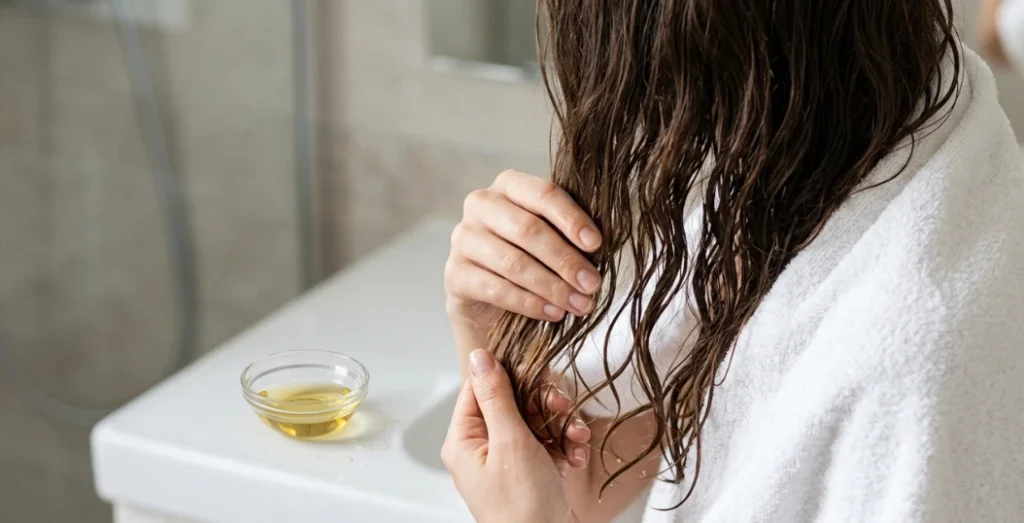
Length oils are used on mid-lengths and ends for softness, shine and less frizz. The main choice is weight: lighter oils for fine hair, richer ones for thick, curly or coily hair.
Argan Oil
Argan oil is used as a finishing oil for frizz and shine on medium to thick hair. Two or three drops warmed between your palms and smoothed over damp ends is the classic use.
Jojoba Oil
Jojoba oil is technically a liquid wax, used on scalp and ends because it feels close to the scalp’s own oil. It suits fine hair and makes a gentle base for essential oils; it’s the one I reach for when unsure.
Sweet Almond Oil
Sweet almond oil is used to soften dry ends and ease detangling, often as a short pre-wash. It has a faintly sweet smell, and anyone with a nut allergy is better off choosing another oil.
Avocado Oil
Avocado oil is used on very dry, coarse, curly or coily hair that wants a richer coating, before washing or on damp ends. On fine hair it can feel heavy.
Grapeseed Oil
Grapeseed oil is used when hair needs the lightest touch: fine, straight or easily flattened strands. It has almost no scent, spreads thin and works well as a base for blends.
Moringa Oil
Moringa oil is used to smooth frizz and add soft shine to dry or brittle ends. It sits between jojoba and argan in weight and stays fresh longer than many seed oils.
Which Hair Oils Are Used as Thick Pre-Wash Treatments?
Thick pre-wash oils are used on dry hair, 30 minutes to a few hours before shampoo, to soften rough ends and ease that stripped feeling after washing.
Castor Oil
Castor oil is used as a heavy, glossy pre-wash oil for the scalp, edges and dry ends. It’s so thick that most people thin it with jojoba or almond oil, and its growth reputation is mostly traditional.
Jamaican Black Castor Oil
Jamaican black castor oil is made by roasting castor beans and boiling them with their ash, which gives it a dark color and smoky smell. It’s used like regular castor oil, especially on thick, coily hair, though nothing shows it outperforms the clear kind.
Black Castor Oil
Black castor oil is the wider name for dark castor oil pressed from roasted beans, and the Jamaican style is one type of it. Uses match, and some versions include ash while others don’t, so the ingredient list is the best place to check.
Amla Hair Oil
Amla hair oil is dried amla (Indian gooseberry) soaked in a base oil such as coconut or sesame, used as a traditional pre-wash oil for scalp and lengths. Amla powder also turns up in natural red hair dye mixes made with henna.
Before mixing a natural homemade black hair dye, wash any oil out first, since henna takes best on clean hair.
How Do Essential Oil Uses Differ From Carrier Oil Uses for Hair?
Essential oils are concentrated plant extracts used by the drop on the scalp, while carrier oils are pressed seed, nut or fruit oils used by the teaspoon. Here, rosemary, peppermint, tea tree, lavender and cedarwood are essential oils; the other twelve are carriers.
Essential oils always go into a carrier first; a few drops in a teaspoon of carrier oil is a common start. Patch test behind your ear, wait 24 hours, and rinse straight away if anything burns or stings.
If you’re pregnant, breastfeeding, or have eczema or psoriasis on your scalp, check with a doctor before using essential oils.
Which Hair Oil Uses Go Wrong Most Often?
The most common hair oil mistake is using too much, which turns soft hair limp. Start with a few drops on the ends and add more only if needed.
Other mistakes I’ve made myself:
- Putting heavy castor oil on fine roots before a busy day
- Heating oil until hot instead of just warm (test it on your inner wrist)
- Leaving scalp oil in for days, which can cause buildup and itching
- Expecting oil to stop every strand from falling
That last one worried me for weeks. Shedding about 50 to 100 hairs a day is normal, so a few strands in the comb are usually no cause for worry. Clumps, bald patches or a sore scalp are worth showing a dermatologist.
Final Takeaway
Sorting hair oil uses by job changed my routine more than any single oil did. I stopped asking which oil was best and started asking what my scalp or ends needed that week. Small amounts, chosen for a reason, tend to serve hair best.
Try This Today
Pick one area, scalp or ends, and one oil you already have. Use only a few drops tonight and notice how your hair feels in the morning.
Frequently Asked Questions
Can you mix different hair oils together?
Yes, mixing hair oils is common, such as thick castor oil thinned with jojoba, or a few drops of essential oil in a carrier. Patch test any new blend first.
Should hair oil go on wet or dry hair?
Light length oils usually work best on damp hair, where they help hold water in. Heavy pre-wash oils go on dry hair before shampoo.
How long can you leave oil in your hair?
Pre-wash hair oils are usually left on for 30 minutes to overnight, then shampooed out. Scalp oils, especially blends with essential oils, are better washed out within a day to avoid buildup or irritation.
Can you use hair oil on henna-dyed or colored hair?
Hair oil is usually fine on henna-dyed or colored hair once the color has settled, and it may soften dry ends. Wash oil out fully before your next henna or dye session, since oil can keep color from taking evenly.
- Castor Oil Benefits for Hair: More Shine and Softer, Smoother Ends - November 19, 2026
- Rosemary Oil Benefits for Hair: What It Does Beyond Growth - November 11, 2026
- How Do You Make a Rosemary Hair Oil Recipe at Home That Actually Works? - October 29, 2026