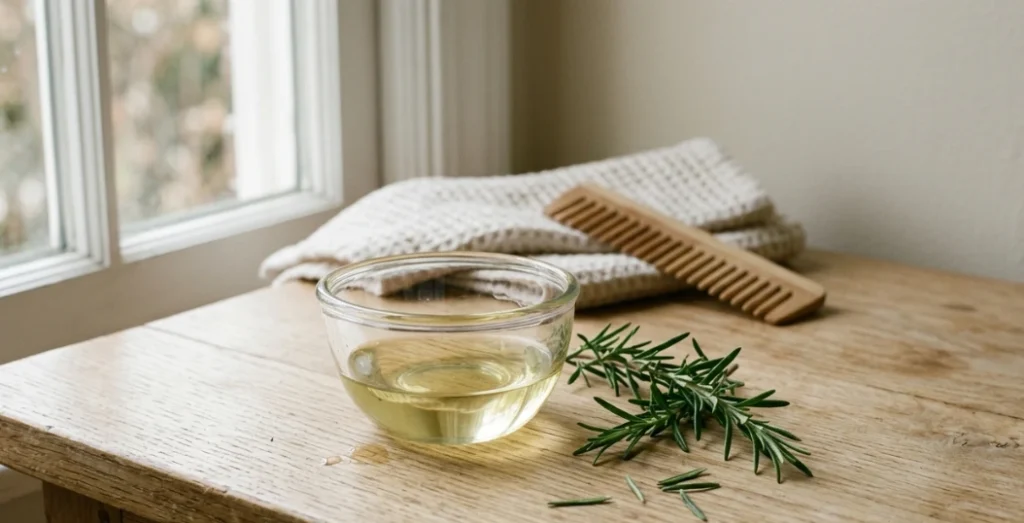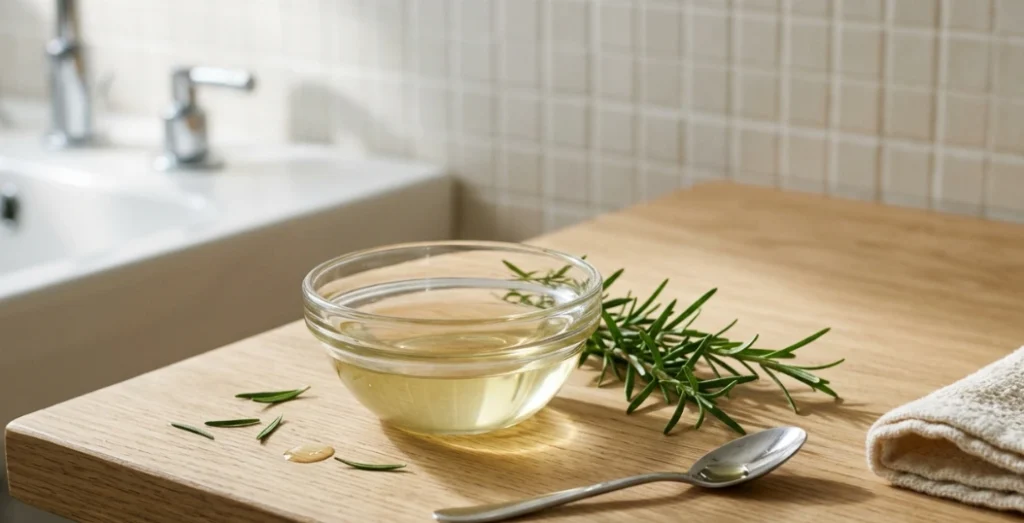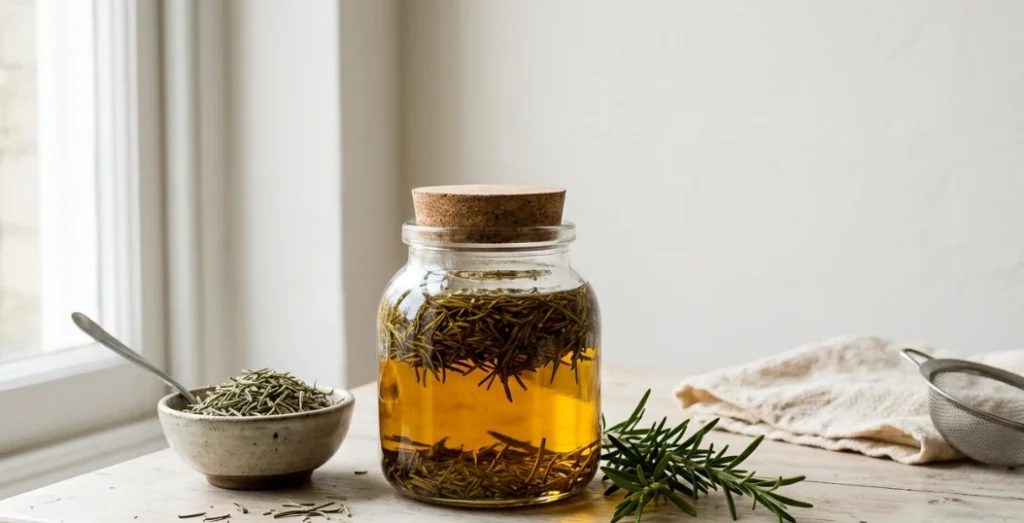
The first rosemary hair oil I made went cloudy within a week over one simple mistake. A rosemary hair oil recipe that stays fresh and feels good on your scalp comes down mostly to patience and dry ingredients.
Steep dried rosemary in a carrier oil for two to four weeks, or warm it gently for two to three hours, then strain it well. If you’re short on time, a well-diluted rosemary essential oil blend works too. Use it two or three times a week and give it a few months.
Which Rosemary Hair Oil Recipe Should You Start With?
The cold infusion is the easiest rosemary hair oil recipe to start with, because it needs no heat and little attention. The warm infusion suits you if you want oil the same day, and the essential oil blend is ready in two minutes.
Whichever you pick, think in months. In a trial of 100 adults with thinning hair, the rosemary oil group saw hair count rise at six months but not at three. Once I read that, I stopped checking the mirror after every session.
How Do You Make a Cold-Infused Rosemary Hair Oil?
A cold-infused rosemary hair oil is made by steeping dried rosemary in carrier oil at room temperature for two to four weeks.
What you need
- 3 tablespoons dried rosemary leaves
- ½ cup (120 ml) jojoba, sweet almond or olive oil
- A clean, completely dry glass jar with a lid
- A fine sieve and a thin cotton cloth
How to do it
- Crush the rosemary lightly between your fingers to wake up its scent.
- Add it to the jar and pour in oil until the leaves sit about 1 inch (2.5 cm) below the surface.
- Close the lid and keep the jar in a warm, dark cupboard, shaking it every day or two.
- After two to four weeks, strain it through the cloth-lined sieve.
Fresh sprigs carry water, and that water is what clouded my first batch. It’s the same dried-herb patience that goes into a natural homemade black hair dye.
How Do You Make a Warm-Infused Rosemary Hair Oil?
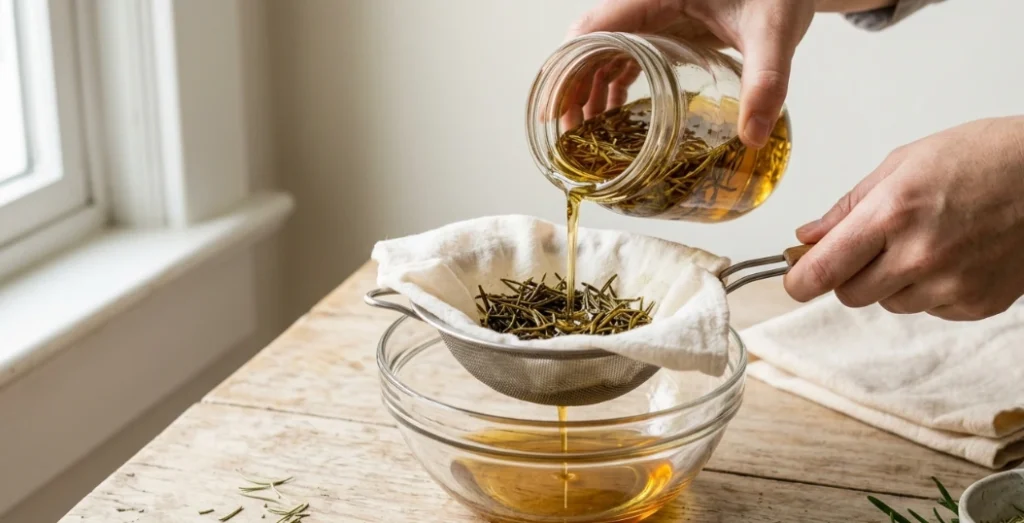
A warm-infused rosemary hair oil takes two to three hours over very low, indirect heat.
- Set a heatproof glass bowl over a small pan of barely simmering water, without the bowl touching the water.
- Add ½ cup (120 ml) carrier oil and 3 tablespoons dried rosemary.
- Keep the oil warm, around 120 to 140°F (49 to 60°C). It should never bubble, smoke or smell fried.
- Stir now and then, topping up the pan’s water as needed.
- Let the oil cool completely, then strain it.
Stay close by. I once wandered off and came back to a toasted, bitter smell.
How Do You Mix a Quick Rosemary Essential Oil Hair Blend Safely?
A quick rosemary essential oil hair blend works as long as the essential oil is well diluted, since undiluted oil is too strong for the scalp.
- 2 tablespoons (30 ml) carrier oil
- 5 to 6 drops rosemary essential oil
Stir them together in a small glass dish and keep the blend well away from your eyes. If you’re pregnant, breastfeeding or managing a health condition, check with your doctor before using essential oils.
If your scalp tingles uncomfortably, wash it out and use fewer drops next time.
How Should Homemade Rosemary Hair Oil Be Stored?
Homemade rosemary hair oil keeps best in a dark glass bottle in a cool cupboard, where it usually stays fresh for three to six months.
Use a clean, dry spoon so no water gets in. Throw it out if it turns cloudy, grows fuzzy spots, or smells sour or like old crayons.
Coconut oil turns solid below about 76°F (24°C), so warm the bottle in a bowl of warm water rather than the microwave.
How Do You Use Rosemary Hair Oil on Your Scalp?
Rosemary hair oil works best massaged into the scalp before washing, left on for 30 minutes to a few hours. Patch test first behind your ear and wait 24 hours.
- Part dry hair and apply ½ to 1 teaspoon along the partings.
- Massage with your fingertips, not nails, for two to three minutes.
- Smooth any leftover oil through your ends.
- Work shampoo into dry, oiled hair before adding water.
In one lab comparison, coconut oil was the only one of three oils tested to reduce protein loss when used before washing.
Apply henna or other plant dyes to clean, oil-free hair, since oil can stop the color taking evenly. Between dye days, oiling sits comfortably alongside the habits that help prevent natural red hair dye from fading, and these hair dye tips and tricks cover the rest.
Final Takeaway
Making rosemary hair oil taught me to slow down. The jar waiting in my cupboard, the small daily shake, the oil that smells like a herb garden: none of it is dramatic, and that’s the point. Choose the recipe that fits your week, keep everything dry, and let a few months of gentle massages show you what they can do.
Try This Today
Put three tablespoons of dried rosemary in a clean, dry jar, cover it with your favorite carrier oil, and tuck it somewhere dark. In two weeks, it’s ready to strain.
Frequently Asked Questions
Can fresh rosemary be used in a rosemary hair oil recipe?
Fresh rosemary can be used once it’s dried. Leave the sprigs on a towel for a few days until the leaves snap, because leftover water makes homemade oil cloudy or moldy.
How long does homemade rosemary hair oil last?
Homemade rosemary hair oil usually lasts three to six months in a cool, dark place. A sour or crayon-like smell means it’s time for a fresh batch.
Can rosemary hair oil be left in overnight?
Rosemary hair oil can usually stay in overnight if your scalp feels comfortable. Wrap your hair in an old cotton scarf to protect your pillow.

- Castor Oil Benefits for Hair: More Shine and Softer, Smoother Ends - November 19, 2026
- Rosemary Oil Benefits for Hair: What It Does Beyond Growth - November 11, 2026
- How Do You Make a Rosemary Hair Oil Recipe at Home That Actually Works? - October 29, 2026