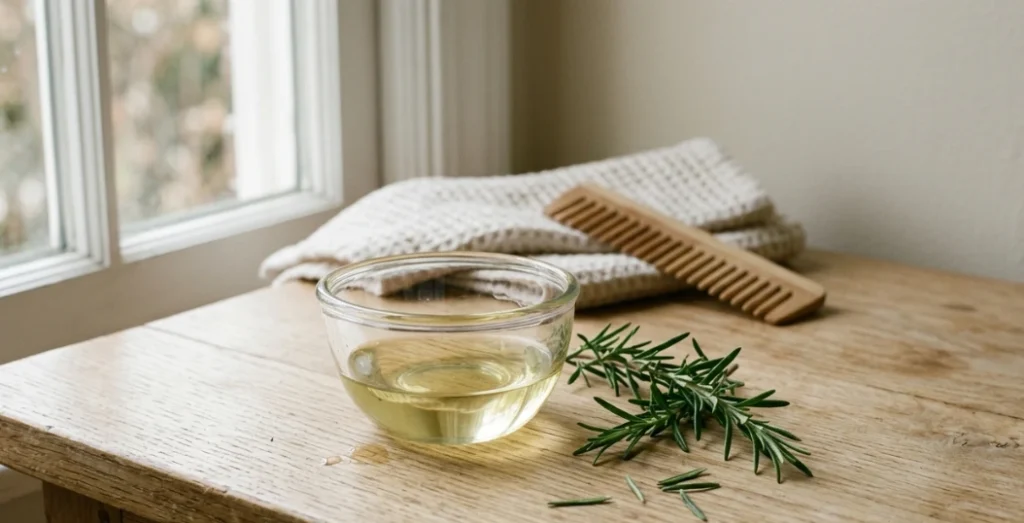
Rosemary oil benefits for hair go further than the growth claims you see everywhere, but they are quieter and easier to miss. I bought my first bottle hoping for growth, and what I noticed first was my scalp: less tight after wash day, with a clean herbal smell.
The short answer: well-diluted rosemary oil can calm a tight scalp, ease dry flakes and leave an oily scalp feeling fresher. Its shine comes mostly from the carrier oil. Two or three times a week, always diluted, is plenty.
Which Rosemary Oil Benefits for Hair Are Realistic?
The realistic rosemary oil benefits for hair are about comfort: a calmer, fresher scalp and smoother-looking lengths. Claims about curing dandruff, reversing gray hair or repairing split ends go further than anyone has shown.
The clearest human finding beyond growth is about gentleness. In a six-month trial of 100 men, scalp itching was reported less often with rosemary oil than with 2% minoxidil, a common hair loss solution. Itching still rose in both groups, so rosemary oil isn’t itch-free; it was simply the milder of the two.
Growth is a slower question, and how long rosemary oil usually takes to grow hair is measured in months, not weeks.
Is Rosemary Oil Gentle Enough for a Tight, Itchy Scalp?

Rosemary oil is usually gentle enough for a mildly tight or itchy scalp when well diluted, and the slow fingertip massage helps it feel calmer.
What you need:
- 1 teaspoon of jojoba or sweet almond oil
- 2 drops of rosemary essential oil
How to do it:
- Patch test first: dab a little of the mix behind your ear and wait 24 hours.
- Stir the drops into the carrier oil.
- Part dry hair into four sections and dot the mix along each part, well away from your eyes.
- Massage in small circles with your fingertips, not nails, for about 3 minutes.
- Leave it on for 30 minutes to a few hours, then shampoo.
I do this two or three evenings a week. A faint cool tingle is normal; stinging or redness means it’s time to wash it out.
Can Rosemary Oil Help a Dry, Flaky Scalp?
Rosemary oil can help a dry, flaky scalp feel more comfortable as a pre-wash treatment, but only when the flakes are dry ones. That difference matters, because dandruff affects up to half of people after puberty, and oily dandruff often gets worse with extra oil.
Check your flakes first:
- Dry flakes are small, white and powdery, and the scalp feels tight, often in dry winter air.
- Oily dandruff flakes are larger, yellowish and greasy; skip oiling and ask a dermatologist or pharmacist about a medicated dandruff shampoo.
For dry flakes:
- Mix 2 drops of rosemary essential oil into 2 teaspoons of olive or sweet almond oil.
- Work it into the scalp 30 to 60 minutes before washing.
- Massage for 2 minutes, then shampoo once and condition only your lengths.
Once a week was enough for me; my scalp felt less tight by the second wash.
How Can Rosemary Oil Make an Oily Scalp Feel Fresher?
For an oily scalp, one drop of rosemary oil in a single shampoo portion gives that fresh, clean feel without adding any oil to the roots.
- Pour about 1 teaspoon of your usual mild shampoo into your palm.
- Add 1 drop of rosemary essential oil and rub your palms together.
- Lather it into your scalp only for about a minute, keeping your eyes closed.
- Rinse well, then condition the ends.
It won’t change how much oil your scalp makes, but roots often feel lighter that day.
How to Get Shine From Rosemary Oil Without Greasy Hair
The shine from rosemary oil comes mostly from its carrier, so the trick is using very little on the lengths and keeping it off the roots.
- Mix 1 drop of rosemary essential oil into 1 teaspoon of argan or jojoba oil.
- Warm 2 or 3 drops between your palms.
- Press it onto dry ends and mid-lengths, or scrunch it into damp curls.
The rosemary adds scent more than gloss. If you use henna, wash any oil out fully before mixing natural red hair dye at home or a natural homemade black hair dye, since henna takes best on clean hair. A light ends oil also suits a routine for keeping natural red hair dye from fading.
When Does Rosemary Oil Irritate Instead of Help?
Rosemary oil irritates most often when it’s used undiluted, too often, or too close to the eyes.
Stop and rinse with lukewarm water and mild shampoo if you notice stinging, burning, redness, bumps or worsening itch. Swelling or a spreading rash needs medical care.
If you’re pregnant, breastfeeding, have epilepsy, or have eczema or psoriasis on your scalp, check with a doctor before trying rosemary oil. More gentle routines live in the rosemary oil section and the wider hair care collection.
Final Takeaway
Rosemary oil gave me something smaller than the promises online, and more useful: a scalp that feels looked after. The rosemary oil benefits for hair I trust are the quiet ones, comfort, freshness and softer ends, and they come with a light hand. Let it be a small ritual, not a rescue.
Try This Today
Mix 2 drops of rosemary oil into a teaspoon of jojoba and dab a little behind your ear. If your skin is calm tomorrow, you’re ready.
Frequently Asked Questions
Does rosemary oil stop gray hair?
There’s no good evidence that rosemary oil stops or reverses gray hair. Graying is mostly shaped by genetics and age.
Can rosemary oil fix split ends?
Rosemary oil can’t repair split ends; once a strand splits, only a trim removes it. A light carrier oil can make them look smoother until then.
Do rosemary oil benefits work on curly and coily hair?
Rosemary oil often suits curly and coily hair, which usually welcomes scalp oiling. Keep the scalp mix diluted, and smooth ends oil into damp curls so it spreads evenly.

- Castor Oil Benefits for Hair: More Shine and Softer, Smoother Ends - November 19, 2026
- Rosemary Oil Benefits for Hair: What It Does Beyond Growth - November 11, 2026
- How Do You Make a Rosemary Hair Oil Recipe at Home That Actually Works? - October 29, 2026