Key Takeaways
- Permanent black hair dye can last six to eight weeks before visible fading or root growth appears.
- Semi-permanent black dye typically fades within four to six weeks, depending on how often you wash your hair.
- Hair porosity plays a significant role in how quickly black dye fades, sometimes more than the dye type itself.
- Washing with hot water and sulfate-heavy shampoos is one of the fastest ways to strip black dye.
- Cold rinses, low-wash routines, and pH-balanced products can noticeably extend how long the color holds.
- Making black hair dye last longer is less about one big tip and more about consistent, gentle daily habits.
I remember the first time I dyed my hair black at home. I was genuinely surprised at how rich and deep it looked in the first week, and equally surprised when the vibrancy started shifting by week three. Not dramatically, but enough for me to notice a slight softening at the ends, a cooler undertone fading into something warmer and less defined.
It took me a while to understand that how long black hair dye lasts is not a fixed number. It shifts depending on what kind of dye you used, how your hair absorbs color, how you wash it, and what you do between wash days. Once I started paying attention to those details, I stopped seeing color fade as something that just happens and started seeing it as something I could actually influence.
If you are trying to figure out a realistic timeline for your black dye or looking for honest ways to hold onto it longer, this is exactly what I want to walk you through.
How Long Does Black Hair Dye Last Based on Dye Type?
The first thing that determines longevity is the type of black dye you use, and the differences between types are more significant than most people expect.
Permanent black hair dye is the longest-lasting option. It uses a developer to open the hair cuticle and deposit color deep into the cortex. Once it is in, it does not wash away cleanly. Instead, it fades gradually over six to eight weeks, and what you will notice first is root regrowth rather than dramatic color loss on the lengths. Permanent black dye oxidizes over time, which can cause it to shift toward a brownish or cooler tone at the ends as the weeks pass.
Semi-permanent black dye sits on the outer layer of the hair shaft rather than penetrating deeply. It does not require a developer, which makes it a gentler option, but the trade-off is that it fades faster. Most semi-permanent blacks will start visibly softening after four to six washes and may feel significantly lighter by week three or four, especially on porous or highlighted hair.
Temporary black dye, including rinses and color-depositing products, typically lasts one to three washes. These are mostly designed for short-term coverage and are not meant to hold for weeks at a time.
There is also a fourth category worth mentioning: black henna or plant-based color. These tend to behave somewhere between semi-permanent and permanent, depending on how they are formulated, and they can sometimes build up with repeated applications to become quite dark and long-lasting over time.
How Does Hair Porosity Affect How Long Black Dye Lasts?
Hair porosity is something I overlooked for years, and once I understood it, so many things about my color experience made sense.
Porosity refers to how well your hair absorbs and holds onto moisture and color. High-porosity hair has raised or damaged cuticles that take in color quickly but also release it just as fast. This means black dye goes on easily, looks intense for a short time, and then fades faster than expected. Low-porosity hair resists absorption at first, but once the color is in, it tends to hold longer because the cuticle lies flat and locks things in.
If your hair is chemically processed, heat-damaged, or has been bleached before, it is likely high porosity. This is one reason why people with previously lightened hair often find that black dye fades or turns greenish or gray-toned faster than they expected.
Doing a porosity check before you dye is a simple way to set realistic expectations for your color timeline.
How Washing Habits Change How Long Black Hair Dye Lasts
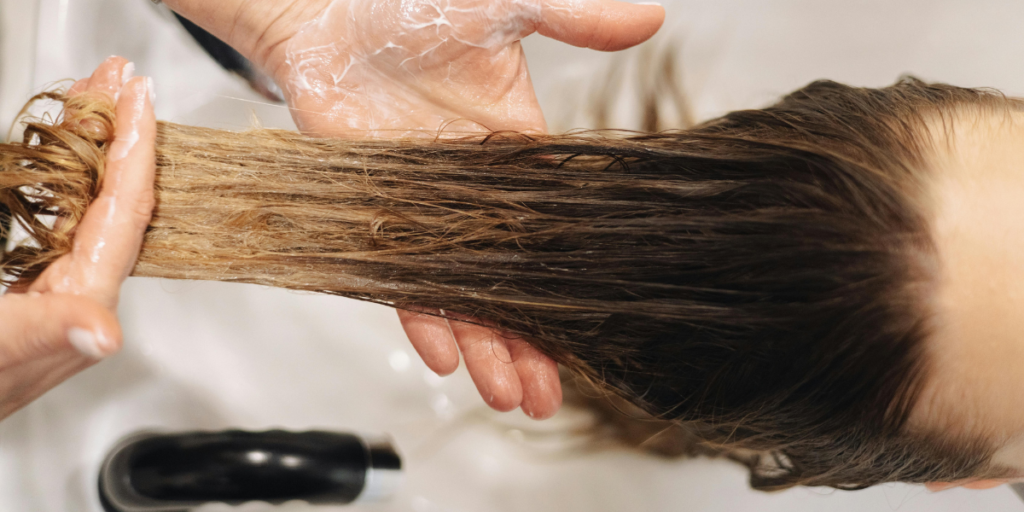
This is where daily behavior has the most direct impact, and I say this from experience because changing my washing routine made a noticeable difference in how my black hair dye held up.
Washing your hair every day is one of the fastest ways to shorten the life of any dye. Each wash removes a thin layer of color pigment along with dirt and oil, and this adds up quickly. For black dye specifically, the first signs of fade often show up as a slightly dull or ashy shift in tone rather than a dramatic color change, so it can sneak up on you.
Hot water also accelerates fading significantly. Heat causes the hair cuticle to swell open, which allows color molecules to escape with every rinse. Switching to lukewarm water for washing and finishing with a cool or cold rinse is one of the simplest changes that genuinely helps.
Sulfate-based shampoos are another major factor. Sulfates are aggressive cleansing agents that strip both oil and color from the hair shaft more aggressively than gentle alternatives. Swapping to a sulfate-free shampoo designed for color-treated hair is not just marketing language. It is a practical adjustment that many people notice results from within the first few weeks.
Practical Ways to Make Black Hair Dye Last Longer
Wash Less Often
I shifted from washing my hair every two days to every four or five days, and the difference in how my black dye held was real. Between washes, dry shampoo applied at the roots helps manage oil without touching the lengths where the color lives. The fewer times water and shampoo contact your hair, the slower the color release.
Rinse with Cold Water at the End of Every Wash
I know cold water is not comfortable, especially in cooler months, but it is genuinely one of the most effective things I have found. A thirty-second cold rinse at the very end of your shower helps seal the cuticle back down after washing. A closed cuticle means color has a harder time escaping between washes.
Use a Color-Safe, Sulfate-Free Shampoo
Not all gentle shampoos are created equal, and the ones formulated for color-treated hair tend to use milder surfactants that clean without stripping aggressively. Pairing this with a deeply hydrating conditioner helps keep the cuticle smooth and lying flat, which also supports color retention.
Reduce Direct Heat Styling
Heat from blow dryers, flat irons, and curling tools opens the cuticle and degrades color over time. I started air-drying more often after dyeing, and on days when I do use heat, I apply a heat protectant beforehand. It does not eliminate the impact of heat, but it reduces how much stress the hair fiber experiences with each styling session.
Protect Your Hair from Sun Exposure
UV exposure fades hair color, including black, by breaking down the pigment molecules. This is more noticeable in summer but worth keeping in mind year-round. Wearing a hat or scarf when spending extended time outdoors, or using a UV-protective hair spray, can slow the rate of color fade meaningfully over weeks of repeated exposure.
Use a Black Color-Depositing Conditioner Between Dye Sessions
Color-depositing conditioners designed for dark or black hair add a small amount of pigment back with each use. They are not a replacement for dyeing, but they can refresh tone and reduce the visible softening that happens mid-cycle. I find them most useful starting around week three, when the first signs of fade usually begin to appear.
A study published through the National Institutes of Health (nih.gov/about-nih/what-we-do/nih-almanac/national-cancer-institute-nci) notes that UV radiation is a known factor in the degradation of color compounds in hair fibers, reinforcing why sun protection is a practical consideration for color-treated hair.
What to Expect at Each Stage of Black Dye Fade
Week one to two is typically when black hair dye looks its best. The color is saturated, the tone is deep, and the overall look is close to what you saw immediately after dyeing.
Week three to four is when the first shifts appear. On permanent dye, the lengths may begin to look slightly softer or shift in undertone, particularly at the ends. On semi-permanent dye, this is when noticeable lightening or warmth might start showing through.
Week five to six brings visible root growth with permanent dye and more obvious fading on semi-permanent applications. This is when most people start thinking about a touch-up, a gloss treatment, or a color-depositing product to bridge the gap.
Beyond six weeks, the longevity really depends on how well aftercare was maintained throughout.
Final Takeaway
What I have come to appreciate about black hair dye is that it rewards consistency more than any single dramatic intervention. The color does not stay rich because of one perfect wash day or one good product. It stays because of a steady accumulation of gentle choices: washing a little less, rinsing a little cooler, using a little less heat, and paying attention to what your hair actually needs in between.
Something is calming about that, honestly. It takes the pressure off any one decision and puts it back in the rhythm of daily care. Your black dye will fade eventually, but how slowly it gets there is genuinely within your influence.
Try This Today
After your next wash, finish your rinse with thirty seconds of the coolest water you can manage and gently squeeze (never rub) your hair dry with a soft towel or cotton cloth. It is a small shift that costs nothing, and over a few weeks, you may notice your color holding its depth a little longer than it did before.
Frequently Asked Questions
How long does black hair dye last on naturally dark hair?
On naturally dark brown or black hair, permanent black dye tends to last longer because there is less contrast between the base and the dye. Root regrowth is also less visible. You may get eight or more weeks before you feel any need to refresh the color.
Why is my black hair dye fading so quickly?
Fast fading is usually linked to one or more of the following: high hair porosity, frequent washing, hot water rinses, sulfate shampoos, or heat styling. Identifying which habits apply to you is the first step to slowing it down.
Can I make semi-permanent black dye last as long as permanent?
Not quite, but you can extend its life meaningfully with cold rinses, infrequent washing, and sulfate-free products. Some people also find that applying it to slightly damp rather than dripping wet hair improves absorption and longevity.
Does black hair dye fade faster in the summer?
It can, because UV exposure and swimming in chlorinated or saltwater both contribute to color fade. Wearing protective styles, covering your hair in the sun, and rinsing immediately after swimming can help offset this.
How do I know when my black dye needs a touch-up versus a full reapplication?
If only the roots have grown in and the lengths still look reasonably dark, a root touch-up is enough. If the lengths have shifted significantly in tone or the color looks uneven throughout, a full reapplication will give a more cohesive result.
- How to Dye Your Hair Purple at Home (and Actually Keep the Color) - June 22, 2026
- Cool Hair Dye Ideas for Short Hair That Actually Look Stunning - June 11, 2026
- Cool Hair Dye Ideas That Actually Suit Real Life and Real Hair - June 9, 2026