Key Takeaways
- Natural dye shades show differently on black hair depending on your skin’s undertone, not just your personal preference.
- Warm undertones tend to open up beautifully with auburn, chestnut, and brown-black natural shades.
- Cool undertones often pair best with blue-black, soft black, and indigo-forward tones.
- Some natural dye shades require your hair to carry red or warm pigment first before a final shade can fully settle.
- What looks rich and dimensional on one person may read as barely there on another with the same base color.
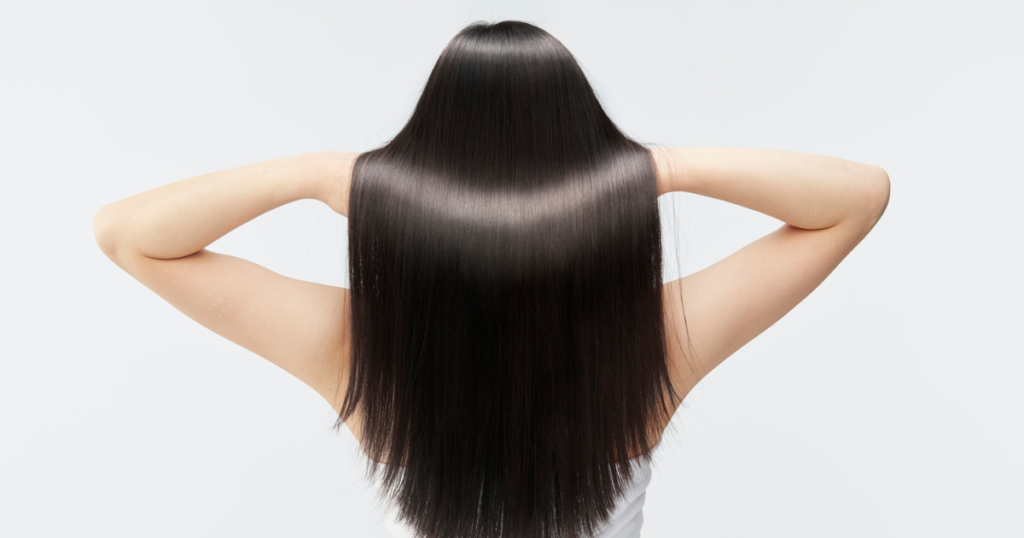
I spent a long time thinking that my black hair gave me no real options when it came to natural dye. I assumed that anything plant-based would simply disappear into my dark strands and leave nothing behind worth noticing. Then I started paying more attention to the light hitting my hair in the afternoon sun and noticed what seemed like something already shifting, even without any dye.
There were undertones already living in my strands, and the question was never really about whether natural dye could work on black hair. It was about which shades could work with what was already there.
If you are sitting with the same question right now, wondering what color to actually choose when everything on the internet seems to be written for lighter starting bases, this is for you. The answer is genuinely more personal than most guides let on, and it starts with understanding your skin rather than just your hair.
How Do You Know Which Shade Direction Is Right for Your Black Hair?
Before considering any specific color, it’s helpful to understand two key factors: how your skin responds to color and the amount of visible contrast you are comfortable with. These two factors quietly determine whether a shade will look warm and glowing against your complexion, or whether it will sit at an odd angle with your natural coloring.
The easiest way to think about this is by identifying whether your skin leans warm, cool, or neutral in its undertone. Warm undertones usually have a golden, peachy, or yellow quality beneath the surface. Cool undertones carry a pinkish, bluish, or rosy base. Neutral sits somewhere between the two, borrowing from both sides without leaning hard in either direction.
You can get a rough sense of your undertone by looking at the veins on the inside of your wrist in natural light. Veins that read as greenish tend to suggest warm undertones. Veins that appear more blue or purple tend to suggest cool undertones. If you genuinely cannot tell which it is, you may be neutral, and that actually gives you the most flexibility of all.
This matters for natural hair dye because, unlike synthetic dye, plant-based pigments do not override your hair’s existing warmth or coolness. They layer on top of it. So the shade you choose needs to feel like an intentional companion to both your hair and your skin, not a correction to either.
What Natural Hair Dye Shades Work Well on Black Hair with Warm Undertones?
If your skin carries warm, golden, or olive undertones, certain natural dye shades will feel like they were made specifically for your coloring. These are the shades that echo your skin’s natural warmth rather than working against it.
Auburn Leaning Brown Black
This is one of the most flattering directions for warm undertones on black hair. The auburn sits inside a deep brown-black base, so it is not loud or dramatic on its own. What it does is catch light in a way that reads as reddish-bronze in sunlight and deep brown in shade. It adds dimension without announcing itself too aggressively. On warm skin, this undertone creates a sense of harmony rather than contrast, and many people find it feels like a more vibrant version of their natural color rather than something foreign.
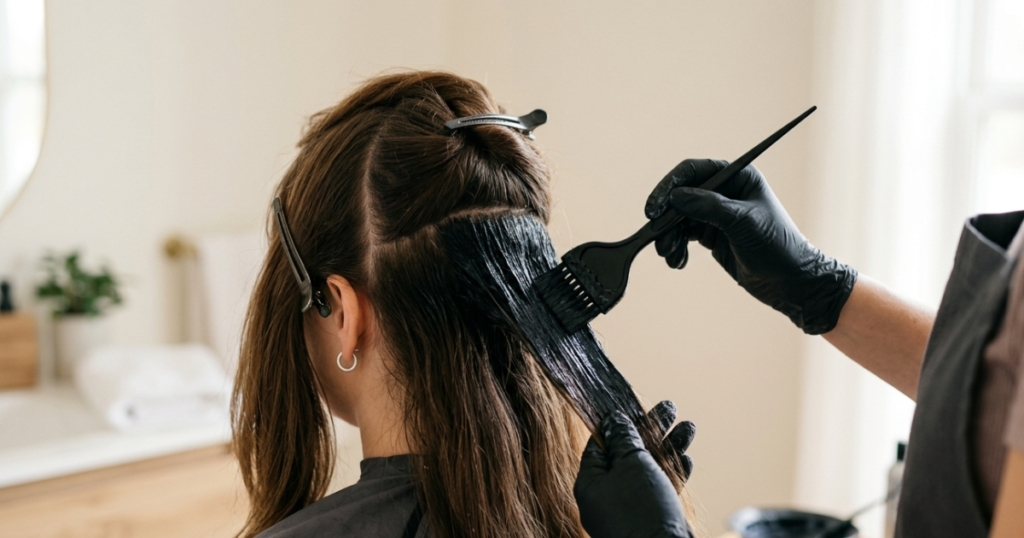
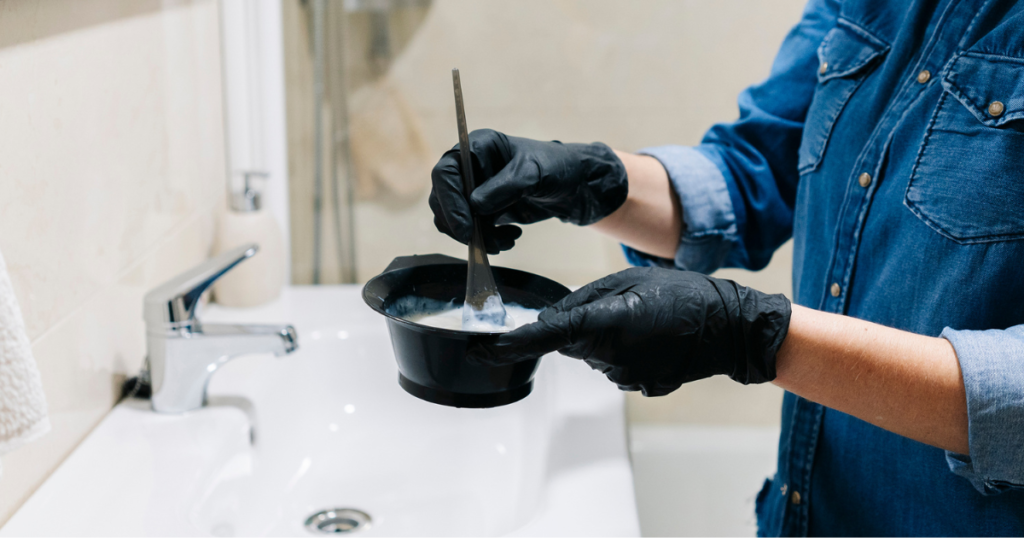
Achieving this kind of shade with natural dye typically involves henna and indigo in proportions that lean heavily on the henna side. The henna contributes the warm red pigment, and the indigo tempers it into a deeper, cooler finish. The exact balance shapes the final warmth, and those with already-warm skin tend to find that this direction suits them more comfortably than anything cooler.
Chestnut and Warm Brown
If deep brown-black feels too close to where you already are and you want a perceptible shift, chestnut can be a lovely middle ground. On black hair with warm undertones, a chestnut shade may not read as a bright red-brown the way it would on lighter hair. Instead, it often settles as a rich, slightly reddish brown that becomes visible in movement and light. It is subtle on black hair, but it is there, and on warm skin, it creates a cohesive, rooted look.
This is a shade that tends to appeal to people who want a change without the change feeling too obvious. It sits close to a natural look while adding just enough warmth to shift the energy of the overall appearance.
Soft Brown Black with Copper Warmth
This sits between a true black and a warm brown, with a faint copper quality that does not announce itself in still lighting but becomes noticeable when the hair moves. It is a particularly grounded choice for warm skin because it keeps the depth of black while layering in just enough warmth to soften the contrast between very dark hair and warm-toned skin.
People with medium to deep warm complexions often find that this direction gives their hair a liveliness that straight black does not, while still looking entirely natural.
What Natural Hair Dye Shades Work Best on Black Hair with Cool Undertones?
Cool undertones in skin tend to look their most balanced alongside hair shades that carry blue, neutral, or deeply cool pigment. The good news is that some of the most striking natural hair shades available for black hair already fall into this territory.
Blue Black

This is one of the most widely flattering shades for cool undertones, and it is also one of the most achievable with natural plant-based dyes. Blue-black sits at the deepest end of the spectrum, richer and more dimensional than flat black because of the blue undertone living inside it. On cool skin, this shade creates a sense of harmony that feels both modern and deeply classic at the same time.
Indigo is the key plant source that brings blue pigment into natural hair color. When used after a henna base on black hair, indigo can deepen the overall tone toward a blue-black that reads as polished and intensely glossy. On cool undertones, this shade may be the closest thing to a natural dye result that genuinely feels tailored rather than approximate.
Natural Black with Neutral Depth
For those with cool undertones who are not looking for any visible shift but want to deepen or refresh their existing black, a neutral deep black shade can serve the purpose well. This does not add warmth and does not lean blue in a way that feels intentional. It simply adds depth and a kind of quiet richness.
On cool complexions, this shade does not compete with the skin’s natural tone. It works alongside it. It is also the most understated option in this range, which makes it an appealing choice for people who want a result that looks like their own hair on a very good day.
Soft Black
Soft black sits slightly off the pure-black spectrum, carrying a subtle warmth or neutrality that makes it feel a little more organic. For cool undertones specifically, a soft black that leans neutral rather than golden can be highly flattering, particularly on medium and deep cool complexions, where it creates dimension without the starker contrast of jet black.
This shade is often described as looking like hair that is naturally, effortlessly rich. It has a little give to it, a little softness, without reading as brown or as anything distinctly colored. It is a quiet choice, but it can be a genuinely beautiful one.
What Natural Hair Dye Shades Work for Neutral Undertones on Black Hair?
Neutral undertones offer the widest range of options because neither warm nor cool shades clash with the skin’s base. The challenge with neutral undertones is not about avoiding mismatches. It is about deciding how much shift or statement you want to make.
Dark Burgundy Black
Burgundy falls into a category that reads as cool at first glance, but actually carries a warmth to it that makes it accessible for neutral undertones, too. On black hair, a deep burgundy from natural dye tends to show only at the edges and in direct light, which gives it a kind of hidden richness. It is not a loud result, but it is a layered one. On neutral skin, this shade often creates enough visual interest without feeling overdone.
Achieving a burgundy direction with plant-based dye typically involves a heavier henna application left to develop fully before any indigo is added. The henna-forward approach brings more red into the final result, which on black hair can settle as a very deep, wine-adjacent shade rather than bright red.
Reddish Brown
For neutral undertones that lean ever so slightly toward warm, a reddish brown can be an appealing direction. On black hair, this shade often reads as subtle, a warm glow rather than a statement color. It is a particularly good fit for people who have never dyed their hair before and want to try something that feels like a small, manageable step rather than a complete shift.
Indigo-Rich Deep Brown
This sits in deeply neutral territory and works well for neutral-undertoned individuals who want something that feels sophisticated and natural. The indigo adds depth and a kind of quiet complexity, and when paired with the natural warmth of henna, the result on black hair is a brown that feels dense and alive rather than flat.
How Bold or Natural Does Each Natural Dye Shade Look on Black Hair?
One thing that surprises many people making this decision for the first time is how different the visibility of a shade can be depending on their hair’s natural starting depth and texture.
Black hair, particularly if it is naturally deep and dense, will absorb plant-based pigment differently than lighter bases do. In indoor lighting, many natural dye shades on black hair may be nearly invisible, showing only as a subtle shift in the hair’s overall tone. In sunlight, particularly direct or strong afternoon light, the same shade can become noticeably warm, reddish, or rich in a way that feels almost like a reveal.
This is not a flaw of natural dye. It is one of its most interesting qualities. The color lives inside the hair rather than sitting on top of it, and it responds to light the way natural pigment always has. If you are looking for a result that is visible in all conditions, the shade needs to be either significantly different from your natural base or applied in a way that allows the pigment to really settle over time.
The boldest natural results on black hair tend to come from: blue-black deepening with indigo, strong henna-forward auburn that sits at the surface, and rich burgundy with full henna saturation. The subtlest results tend to come from neutral black refresh, soft brown black, and chestnut tones that blend closely with the base.
According to a report by Wise Guy Reports, the global plant hair dye market was valued at approximately 2,180 USD million in 2024 and is expected to grow significantly through 2035, reflecting how many people are now making this shift toward plant-based color. The direction you choose is part of a much larger move happening right now across the hair care space.
How Does Skin Depth (Beyond Undertone) Shape Which Shade Feels Right?
Undertone is only one half of the picture. The overall depth or darkness of your complexion also plays a role in how different shades will look once your hair is colored.
On very deep complexions, high-contrast shades tend to be more dramatic and impactful. A blue-black on deep cool skin, for example, can feel powerfully elegant because the hair and skin create a striking visual statement together. A soft auburn on the same deep complexion may be more subtle, picking up warmth without the contrast being as sharp.
On medium complexions, most natural dye shades tend to feel balanced and wearable. The contrast between hair and skin sits in a range where neither extreme (very bold nor very understated) feels out of place, and the shade choice becomes more about personal preference than about working around visual tension.
On lighter complexions with cool undertones, blue-black or neutral black can create a dramatic, editorial quality. On lighter complexions with warm undertones, soft brown-black or auburn directions feel more harmonious and natural rather than stark.
Skin depth does not override undertone in terms of color harmony, but it does determine the visual weight of the final result and how much the shade will announce itself in everyday settings.
Does the Desire for a Natural Look Versus a Bold Look Change the Shade Choice?
Absolutely, and this is one of the most honest ways to make your decision. Before choosing a shade, it helps to simply ask yourself what kind of result you want to carry day to day.
If you want a result that feels like your own hair, only more alive and dimensional, you are looking at: neutral deep black, soft black, chestnut, or warm brown-black. These shades are unlikely to generate comments or questions. They add richness quietly.
If you want a result that people can see in a variety of lighting and that feels like a visible choice, you are looking at: auburn-forward brown, deep burgundy-black, or blue-black. These shades announce themselves in a way that still feels natural but carries a presence.
If you want something genuinely striking, you are looking at a strong henna-heavy auburn result or a fully indigo-saturated blue-black, both of which are visible even in low light and create a distinct shift from your base.
None of these options is wrong. They are simply calibrated differently, and knowing what you want to feel when you look in the mirror is the most useful guide to which shade is actually right for you.
Final Takeaway
I did not expect choosing a shade to feel this personal, but it does. It is not just about picking a color off a chart. It is about understanding what is already happening in your hair and on your skin, and then finding a shade that feels like an extension of that rather than an argument with it. Black hair is not a limitation in this process. It is a foundation, and some of the most grounded, deeply beautiful natural dye results happen right there, in that dark base, when the right shade meets the right undertone.
Whatever direction you choose, permit yourself to take it slowly. A shade that feels uncertain at first often becomes exactly right after a few weeks of wear and several different lighting conditions.
Try This Today
Hold your wrist up to natural daylight and look at your veins for thirty seconds. That one observation can quietly confirm your undertone and point you toward the shades that will feel most at home on your skin. It takes less than a minute and may change the direction of the choice you have been circling for a while.
Frequently Asked Questions
Is it possible to get a visibly different shade on naturally black hair using only plant-based dye?
Yes, though the visibility depends on both the shade chosen and the lighting. Shades with a strong red or indigo base may show as warm or blue-shifted tones in sunlight, even on black hair, while neutral shades tend to deepen the existing color without creating a distinct visible shift. The result can be subtle indoors and more apparent outside.
Can someone with warm skin undertones wear blue-black natural dye comfortably?
It is possible, and many people do wear it, but the cool depth of blue-black tends to create more contrast against warm-toned skin than it does against cool-toned skin. The result may feel bold or slightly harsh, depending on the individual. Warm undertones generally feel more settled alongside shade directions that carry some warmth in the pigment.
Why do natural dye shades on black hair often look different in photos versus real life?
Camera flash and indoor lighting tend to flatten very dark hair, which can make natural dye shades on black hair appear invisible in photos taken in those conditions. The same hair in direct sunlight or in warm natural light may reveal a clear red, brown, or blue tone. This is why many people with black hair say their color only shows up in certain photos.
Is burgundy achievable on black hair using natural dye, and does it look different on different complexions?
A deep burgundy direction is possible with plant-based dye, though on black hair it tends to show as a wine-tinged depth rather than a bright red-violet. On lighter or medium complexions, the burgundy quality can be visible in more lighting conditions. On very deep complexions, it may read as a rich gloss or a subtle warmth rather than a distinct color. Both can be beautiful depending on what the person is hoping for.

- How to Dye Your Hair Purple at Home (and Actually Keep the Color) - June 22, 2026
- Cool Hair Dye Ideas for Short Hair That Actually Look Stunning - June 11, 2026
- Cool Hair Dye Ideas That Actually Suit Real Life and Real Hair - June 9, 2026